productivity
-

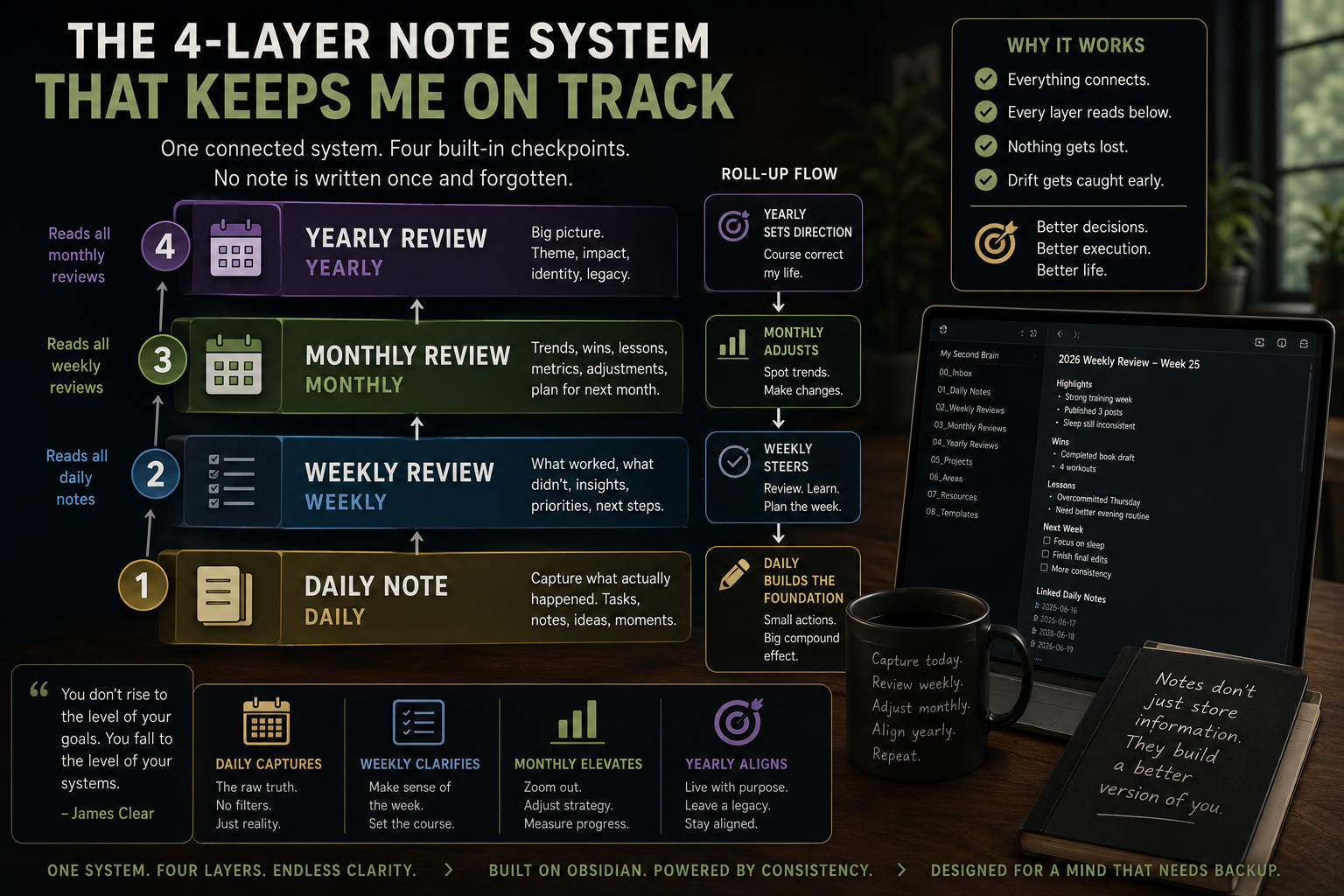
How My Note System Compounds: Daily Notes to Weekly, Monthly, and Yearly Reviews
The short answer: I run one connected, compounding note system with four layers. A daily note captures what actually happened. Every week, the daily notes roll up into a weekly review. At the end of each month, those weekly reviews roll up into a monthly review. Once a year, the monthly reviews roll up into…
Read more: How My Note System Compounds: Daily Notes to Weekly, Monthly, and Yearly Reviews
-
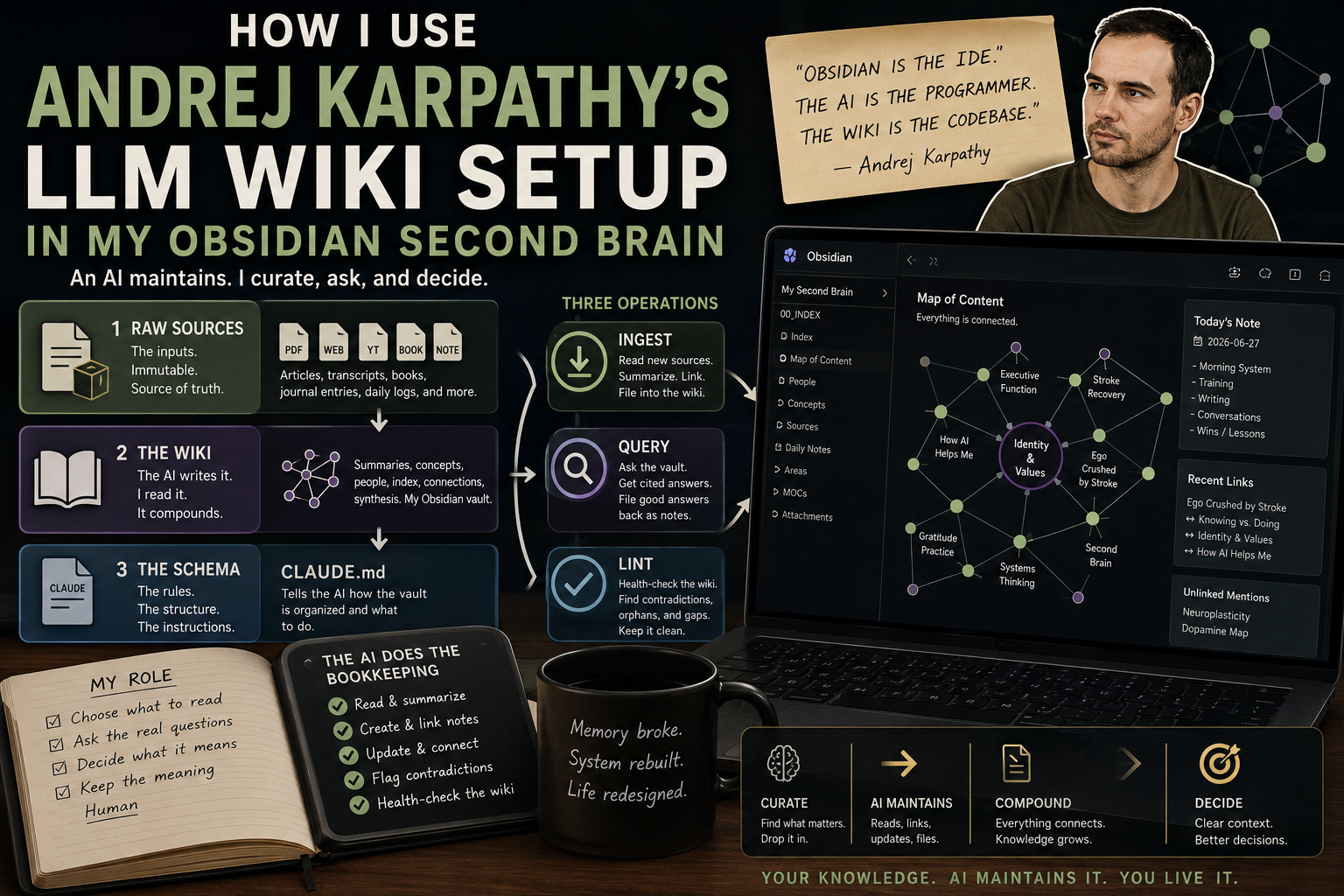
How I Use Andrej Karpathy’s LLM Wiki Setup in My Obsidian Second Brain
Listen to this post in Blake Murphy’s voice The short answer: I use Andrej Karpathy’s “LLM wiki” pattern to run my Obsidian vault as a second brain that an AI maintains for me. The idea is simple. Keep your knowledge in plain markdown, write a schema file that tells the AI how the vault is…
Read more: How I Use Andrej Karpathy’s LLM Wiki Setup in My Obsidian Second Brain
-
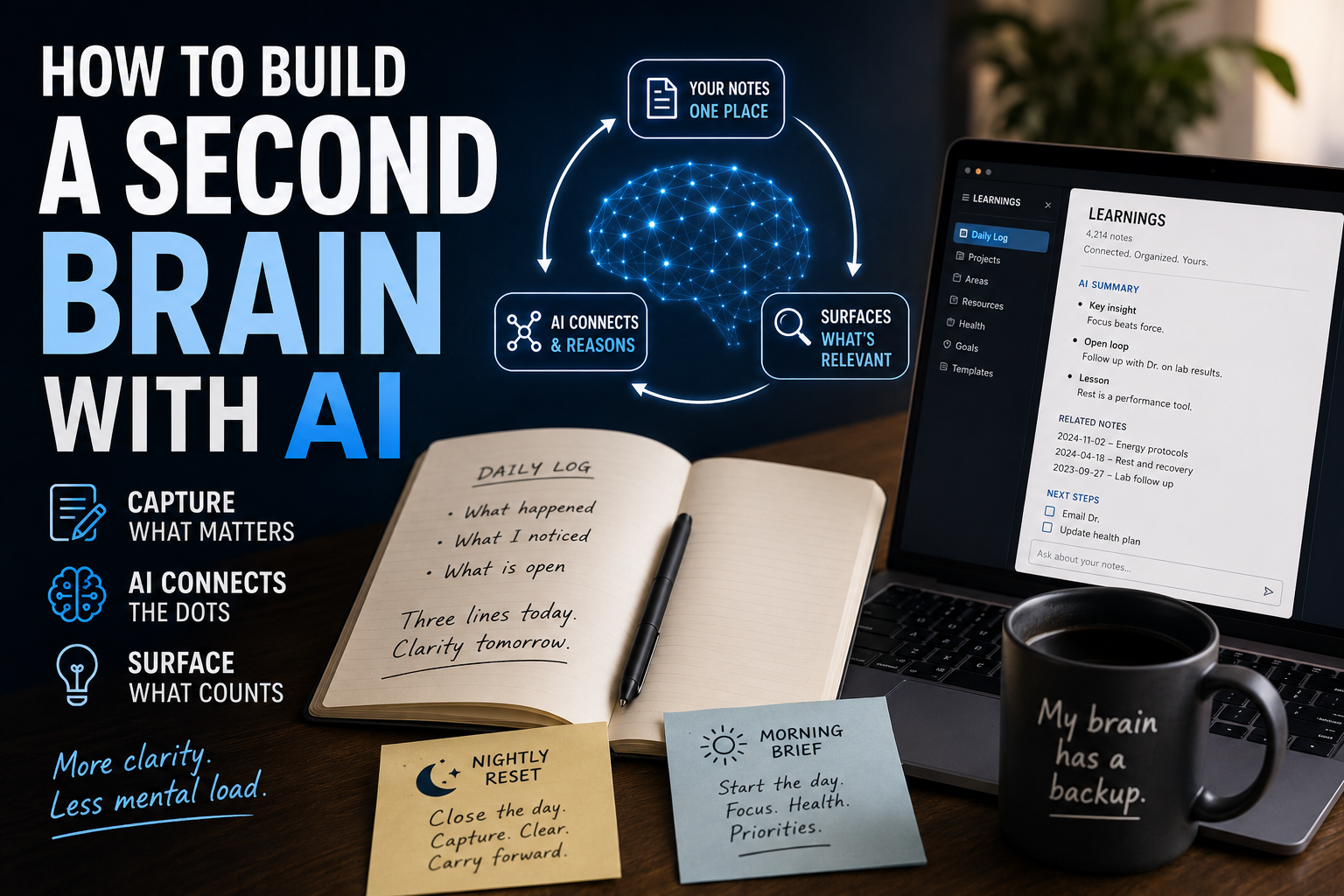
My Second Brain System: How AI Remembers What I Cannot
The short answer: To build a second brain with AI, you create one external place to keep your notes, then let an AI tool read, connect, and surface them so you do not have to hold everything in your head. Start with a single file you write in every day. Add an AI step that…
Read more: My Second Brain System: How AI Remembers What I Cannot
-
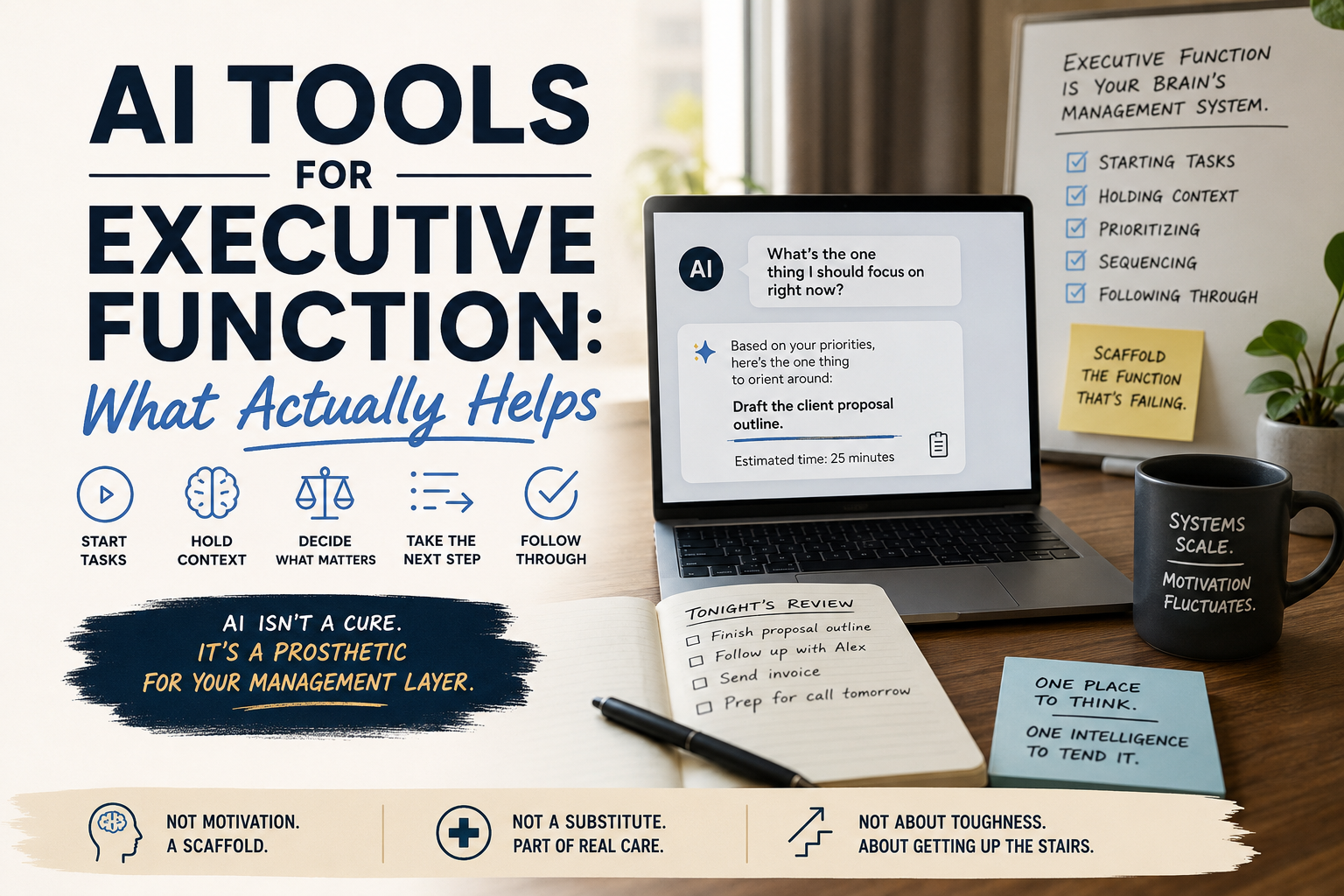
AI Tools for Executive Function: What Actually Helps
Executive function is the brain’s management system. Here are the AI tools and prompts I use to scaffold it after a stroke, and how anyone can use them.
Read more: AI Tools for Executive Function: What Actually Helps
-
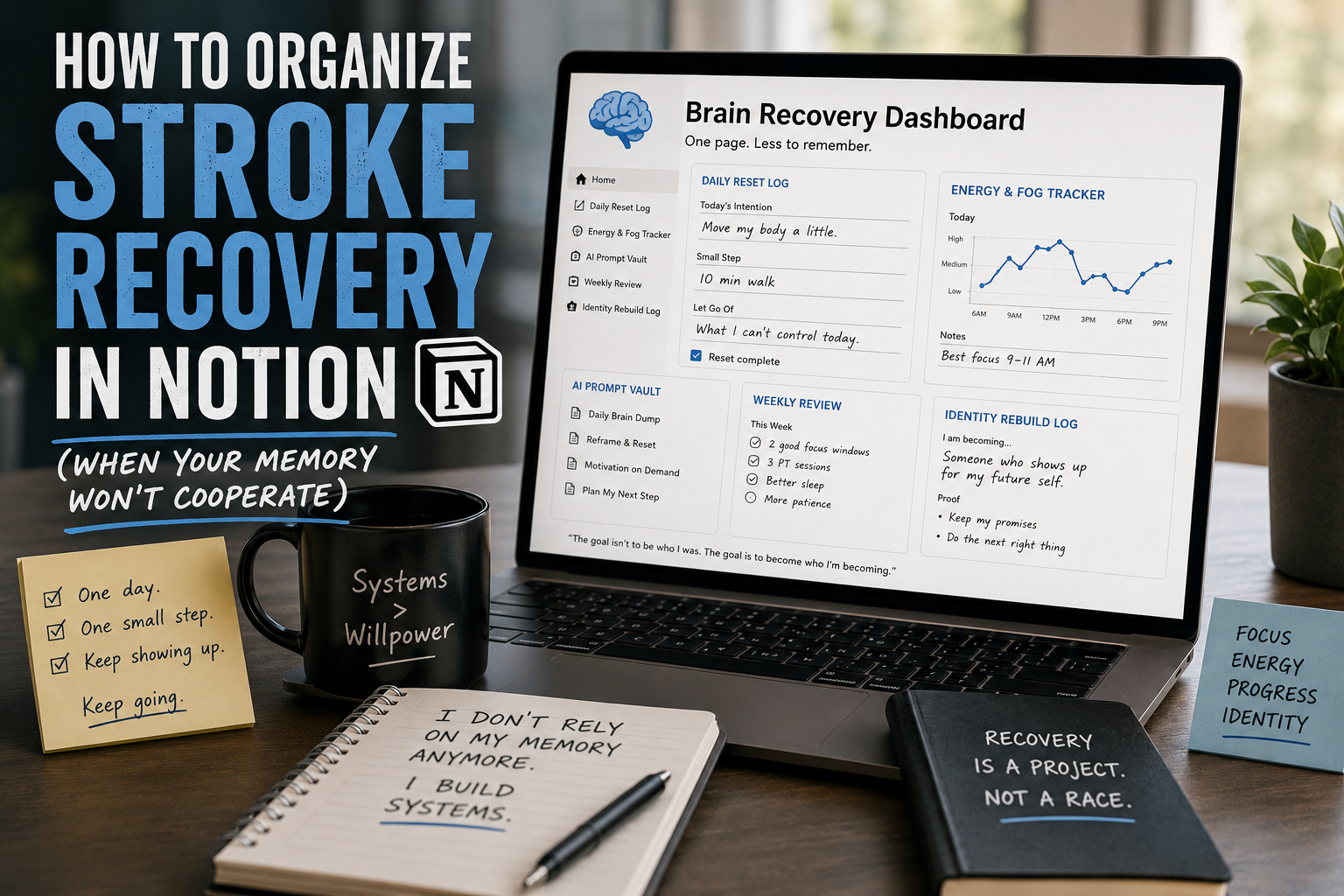
How to Organize Stroke Recovery in Notion (When Your Memory Won’t Cooperate)
The short answer: The best way to organize stroke recovery is to stop relying on your memory and start relying on a system. A simple Notion dashboard can hold your daily intentions, energy patterns, and progress so your brain doesn’t have to hold everything at once. I built one after my own stroke at 35,…
Read more: How to Organize Stroke Recovery in Notion (When Your Memory Won’t Cooperate)
-
Recovery Journaling Without Streaks: How to Show Up When Motivation Is Gone
The short answer: The best recovery journal is the one that still works on your worst day. That means no streaks, no all-or-nothing rules, and pages small enough to finish in two minutes. I built One Day Forward on one idea from systems thinking: small inputs, repeated, change the whole system over time. Hey, Blake…
Read more: Recovery Journaling Without Streaks: How to Show Up When Motivation Is Gone
-
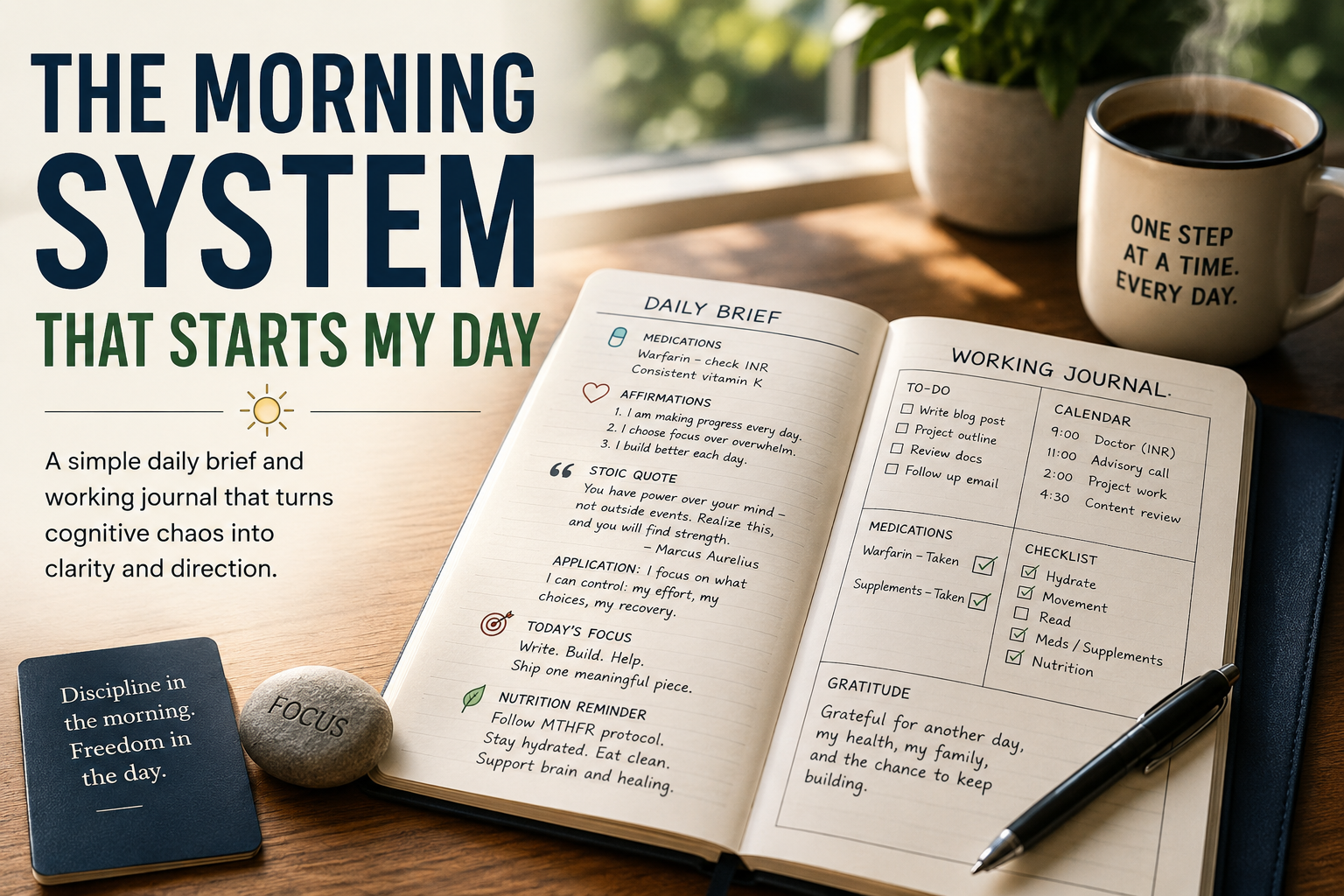
The Morning System That Starts My Day
After my stroke, mornings became a cognitive obstacle course. Discover the automated morning system, a daily brief and working journal, that removes the reconstruction step and helps stroke survivors and anyone with cognitive fatigue start their day with clarity and structure.
-
The Tools I Actually Use: My Honest List of Productivity & Writing Tools
A short, honest list of the productivity tools I use in my own writing, work, and recovery. Some of the links below are affiliate or referral links, which means I may earn a small commission if you sign up through them, at no extra cost to you. Some are not. I label which is which.…
Read more: The Tools I Actually Use: My Honest List of Productivity & Writing Tools
-
How to Use AI for Writing (A Simple Content Creation System)
Learn how to use AI for writing with a simple 5-step content creation system. Use AI as a collaborator, not a ghostwriter, to produce better content faster.
Read more: How to Use AI for Writing (A Simple Content Creation System)
-
How to Make Decisions Faster and Better (A Simple Framework)
Stop overthinking. Learn a simple 5-type decision framework that helps you make faster, better decisions by matching your effort to the actual stakes.
Read more: How to Make Decisions Faster and Better (A Simple Framework)