
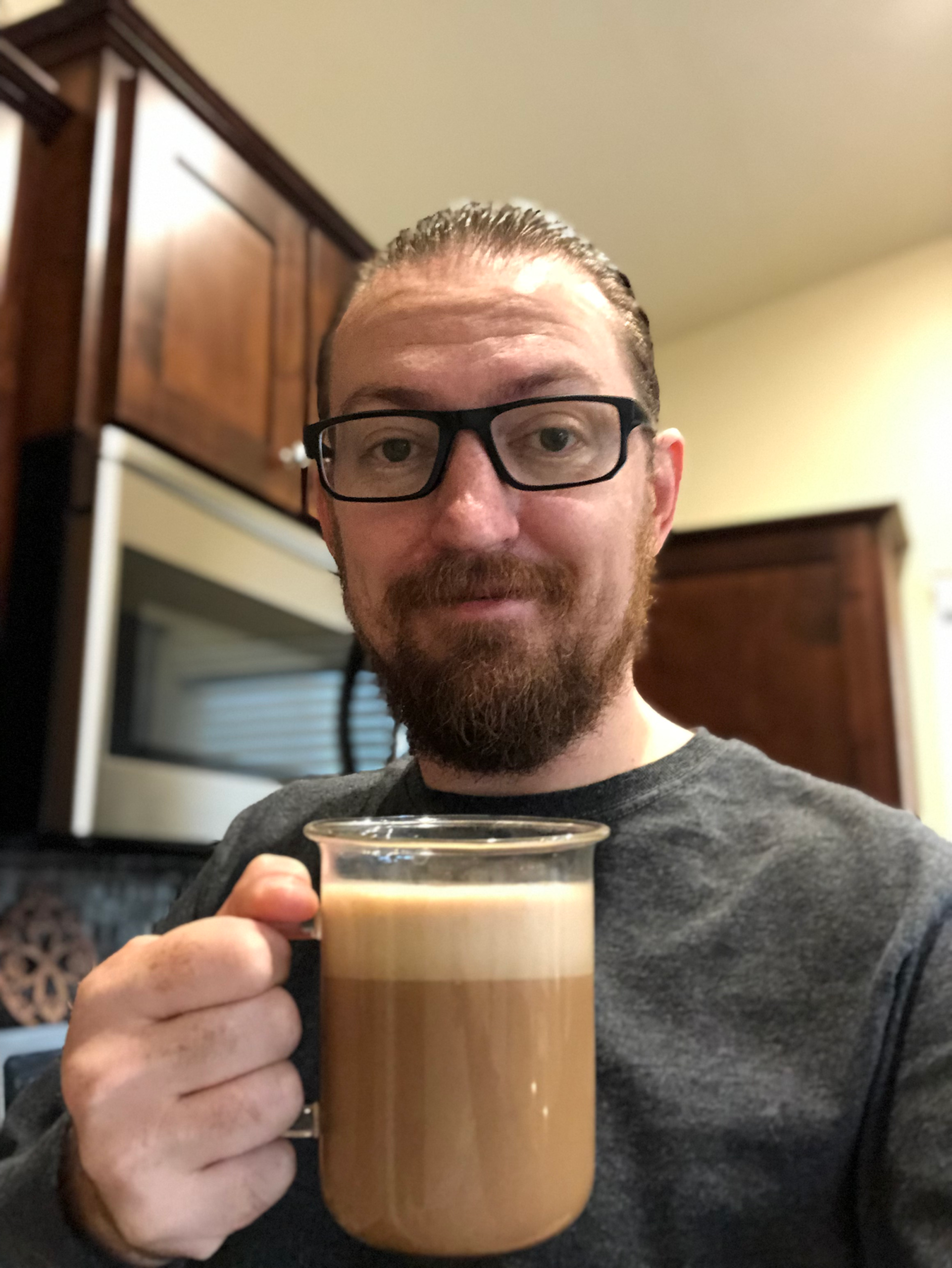
I got into biohacking around 2016. Not because someone told me to. Because I felt like something was off and I couldn’t explain it well enough to a doctor. This is my honest biohacking journey: the experiments that worked, the ones that didn’t, and what nearly a decade of self-experimentation actually taught me about sleep, cold exposure, ketogenic diets, red light therapy, and tracking your own data. For years I logged it by hand in an Official Bullet Journal before moving most of it to apps.
What Is Biohacking?
Biohacking is the practice of making deliberate changes to your lifestyle, environment, and inputs to optimize how your body and mind function. Think of it as running experiments on yourself, using your own biology as the lab.
The word sounds clinical. The concept is actually pretty old. Humans have been tinkering with sleep, food, breath, and movement for thousands of years. We just gave it a new name.
Why Biohacking Matters
You’ve heard “you are what you eat.” That saying has always stuck with me, but not in the way it’s usually meant.
My first thought isn’t about nutrients. It’s about what’s stored in the fat of the animals we eat. The antibiotics they’re injected with. The stress hormones coursing through them at slaughter. We absorb more than calories. We absorb inputs. And most of us have no idea what those inputs are doing to us.
That’s what drew me in.
Where I Started With Biohacking
My first real biohack was embarrassingly simple: cold showers. No gear. No protocol. Just turning the dial to cold and standing there.
From there, I moved to bulletproof coffee, then the ketogenic diet, then exogenous ketones. I started experimenting with acupressure mats to stimulate the vagus nerve. Red light therapy. Fasting windows. Sleep tracking.
Some of it worked. Some of it didn’t. Most of it taught me something either way.
I’m still experimenting.
The Honest Truth About Biohacking
I’m not going to tell you I cracked the code. Biohacking culture has a problem with overselling. Someone finds one thing that works for them and turns it into a $200 supplement stack and a podcast.
What I can tell you is that paying closer attention to your inputs changes things. Not always in the ways you expect. But the attention itself is the first hack.
What You Measure, You Improve
Early on, I started tracking everything.
Not because someone told me to. Because I couldn’t figure out what was actually working. One week I felt sharp and energized. The next I felt foggy and slow. Same routine, different results. The variable I kept missing was the data.
So I got obsessive about it. Notes apps, spreadsheets, paper journals scattered across three different places. I was logging:
- What time I went to sleep and what time I woke up
- How much water I drank across the day
- Daily protein intake
- How I felt when I woke up (1–10, no overthinking it)
- What I ate and when
- Exercise, even if it was just a walk
- Mood, energy, and focus by midday
It looked chaotic. And for a while, it was.
But patterns started to emerge. Sleep before midnight made a measurable difference in my morning clarity. Protein under 150g left me craving sugar by 3pm. Even one night of poor sleep tanked my focus for two days, not one.
None of this is revolutionary information. But there’s a difference between knowing something and seeing it in your own numbers. When you watch your energy scores drop every time you skip your morning routine, skipping it stops feeling like an option.
The tracking also kept me honest. It’s easy to convince yourself something is working when you want it to work. The data doesn’t care what you want.
The problem with scattered data
The downside? I had no system. A protein log in one spreadsheet. Sleep notes in a journal I’d lose for two weeks. Mood tracking in an app I’d forget to open.
Eventually I consolidated it. One place, daily check-in, five minutes max. Anything longer and I wouldn’t sustain it.
That’s a principle I’d apply to anyone starting out: don’t optimize the tracking system before you’ve built the habit of tracking at all. Start ugly. Stay consistent. Improve the system later.
What Actually Worked in My Biohacking Routine
After years of experimenting, a few things produced results consistent enough to stick around.
Sleep won every time. Not sleep hacks. Just sleep. Consistent bedtime, dark room, no screens for the last 30 minutes. Every other intervention I tried performed better when my sleep was solid and worse when it wasn’t. Sleep is the foundation. Everything else builds on top of it.
Cold exposure changed my nervous system in a way I didn’t expect. I started with cold showers because they were free. Eventually moved to cold plunges. The physiological benefits are real: reduced inflammation, improved circulation, a measurable shift in how I respond to stress. But the real benefit was mental. Training yourself to do something uncomfortable on purpose, daily, changes your relationship with discomfort in general.
The ketogenic diet worked for me during a specific season. Mental clarity was noticeably sharper. The brain fog I’d normalized for years lifted within about three weeks. I don’t eat strict keto anymore, but I’ve kept the principles: low processed carbs, higher fat, moderate protein, minimal sugar. The full keto version is hard to sustain socially. The underlying principle is worth keeping.
Red light therapy is the one people raise an eyebrow at. I get it. It sounds like pseudoscience. The research on photobiomodulation is actually more robust than most people realize. Mitochondrial function, inflammation reduction, skin recovery. I use it consistently enough that when I stop, I notice. That’s usually the test I apply.
Protein and hydration are the least exciting interventions and probably the ones that moved the needle most. Most people are chronically under-eating protein and walking around mildly dehydrated every day. Fixing those two things doesn’t feel like biohacking. It feels like basic maintenance. But the results show up in the numbers.
What Didn’t Work (Or What I Got Wrong)
Exogenous ketones gave me an energy spike and an expensive habit that didn’t justify the cost once I was already eating low-carb. Useful for transitioning into ketosis. Less useful as a daily supplement.
Acupressure mats were interesting but inconsistent. Vagus nerve stimulation through breathing and cold exposure worked better and cost nothing.
Supplement stacking. I went through a phase of taking twelve things every morning. Some of it helped. Most of it was noise. I’ve since cut it down to a handful of things I can point to real evidence for. Less is usually more here.
Tracking too many variables at once. When you change five things simultaneously, you learn nothing. You feel better or worse, but you don’t know why. I had to learn to change one variable at a time, hold everything else constant, and wait long enough to actually see a signal.
My Current Biohacking Stack
I still experiment. That part hasn’t changed.
What has changed is the patience. In the beginning, I wanted results in two weeks. Now I understand that most meaningful biological adaptations take months, not days. I give interventions longer runways before drawing conclusions.
My current stack is simpler than it’s ever been. Consistent sleep. Daily movement. Cold exposure several times a week. Low processed food. High protein. Red light therapy. Time outside. A short daily check-in to note how I’m feeling.
That’s mostly it.
The expensive gear and exotic supplements were part of the learning. But the fundamentals are what stayed.
How to Start Your Own Biohacking Experiments
You don’t need to buy anything.
Pick one variable. Change only that variable. Track how you feel before and after using a simple daily score. Give it at least three weeks. Draw a conclusion. Then move on to the next thing.
That’s the whole method.
The biohacking industry wants you to believe the barrier to entry is a $400 supplement protocol or a $600 red light panel. It isn’t. The barrier is patience and consistency, which are free.
Start with sleep. Get that dialed in first. Everything else performs better when sleep is right. Once sleep is solid, look at hydration and protein. Once those are handled, add cold exposure if you want to experiment with stress adaptation.
Build the foundation before you start adding complexity. Most people skip the foundation entirely and wonder why the expensive stuff doesn’t work.
In Short
- Biohacking is deliberate self-experimentation using your own biology as the lab
- Everything you put into your body is an input: food, light, temperature, thought, movement
- Track one variable at a time, changing too many at once means you can’t identify what’s working
- Sleep, protein, hydration, and cold exposure produced the most consistent results for me
- The fundamentals outperform the supplements. Build the base first.
FAQ
What is biohacking in simple terms? Biohacking is making intentional changes to your diet, environment, or habits to improve how your body and mind perform. It ranges from basic lifestyle adjustments to advanced supplementation and technology.
Is biohacking safe? Most entry-level biohacking, cold exposure, intermittent fasting, sleep optimization, carries low risk. More advanced interventions carry real risk and should be approached with professional guidance.
Where should I start with biohacking? Start with sleep quality, protein intake, hydration, and daily movement. These have the strongest evidence and cost nothing. Build from there.
What did Blake try first? Cold showers, then bulletproof coffee, then the ketogenic diet, exogenous ketones, acupressure mats, and red light therapy. The experimenting is ongoing.
What should I track when biohacking? Sleep time, water intake, daily protein, and a simple 1–10 energy or mood rating. Four data points give you enough signal to spot patterns without overwhelming you.
How long before biohacking changes show up in your data? Most lifestyle changes take 2–4 weeks to show a clear signal in self-tracked data. Single-variable changes are easier to detect. The more you change at once, the harder it is to identify what’s working.
Do I need expensive gear to start? No. Cold showers are free. Sleep optimization is free. Tracking with a notebook is free. Start there before spending money on anything.
Frequently Asked Questions
What is biohacking?
Biohacking is the practice of making deliberate changes to your lifestyle, environment, and inputs to optimize how your body and mind perform. The idea is old. Humans have always tinkered with sleep, food, and movement.
How did you start biohacking?
I started around 2016 because something felt off and I wanted to feel better. My first biohack was embarrassingly simple: cold showers, no gear or protocol, just turning the dial to cold.
What did you try after cold showers?
From cold showers I moved to bulletproof coffee, then a ketogenic diet, then exogenous ketones, experimenting step by step to see what actually changed how I felt.
Is biohacking safe for beginners?
Start simple and low-risk, sleep, light, hydration, movement, cold exposure, and change one thing at a time. This is personal experience, not medical advice; check with a professional before bigger interventions.
Some links in this post are affiliate links. If you buy through them, I may earn a small commission at no extra cost to you. I only link to products I have personally used or would use again.
I keep notes and experiments like this in my AI second brain. The full system is in My Brain Has a Backup.