automation
-

Cognitive Prosthetics: How I Rebuilt My Brain With Systems
The short answer: a cognitive prosthetic is any external system that does the work your brain used to handle on its own. After a stroke damaged my executive function and memory, I stopped waiting for motivation and built a small stack of tools instead: an AI assistant, a plain-text note vault, a daily brief, and…
Read more: Cognitive Prosthetics: How I Rebuilt My Brain With Systems
-
AI Social Media Content Generator: Why I Built Castwyn
Castwyn is an AI social media content generator that turns one idea into platform-specific posts for ten networks, using your voice and your own AI key.
Read more: AI Social Media Content Generator: Why I Built Castwyn
-
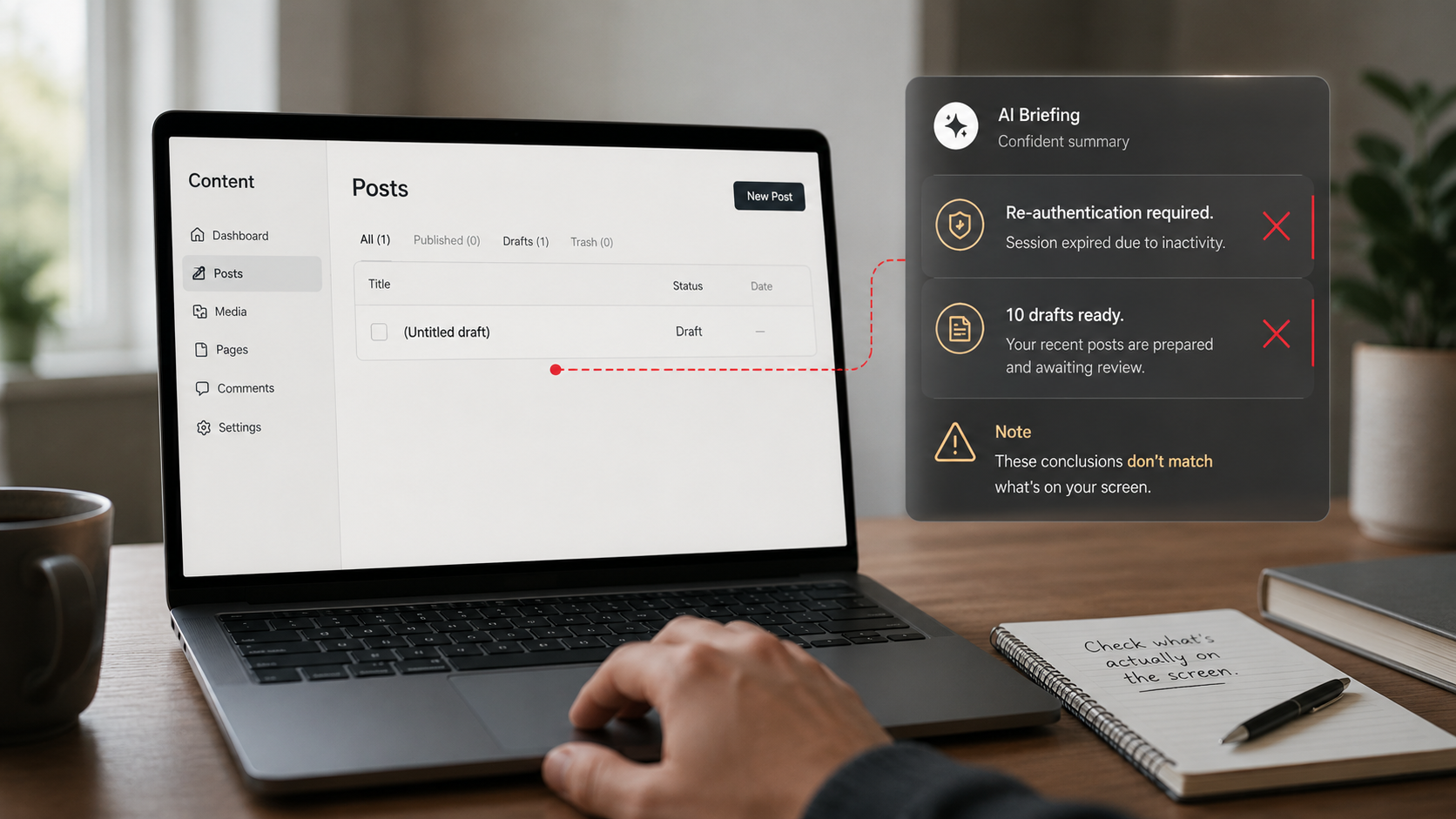
My AI Was Confidently Wrong Twice Today
AI assistants rarely fail by inventing facts. They fail by reading real output and interpreting it too confidently. Here is how I caught two errors in one day.
-
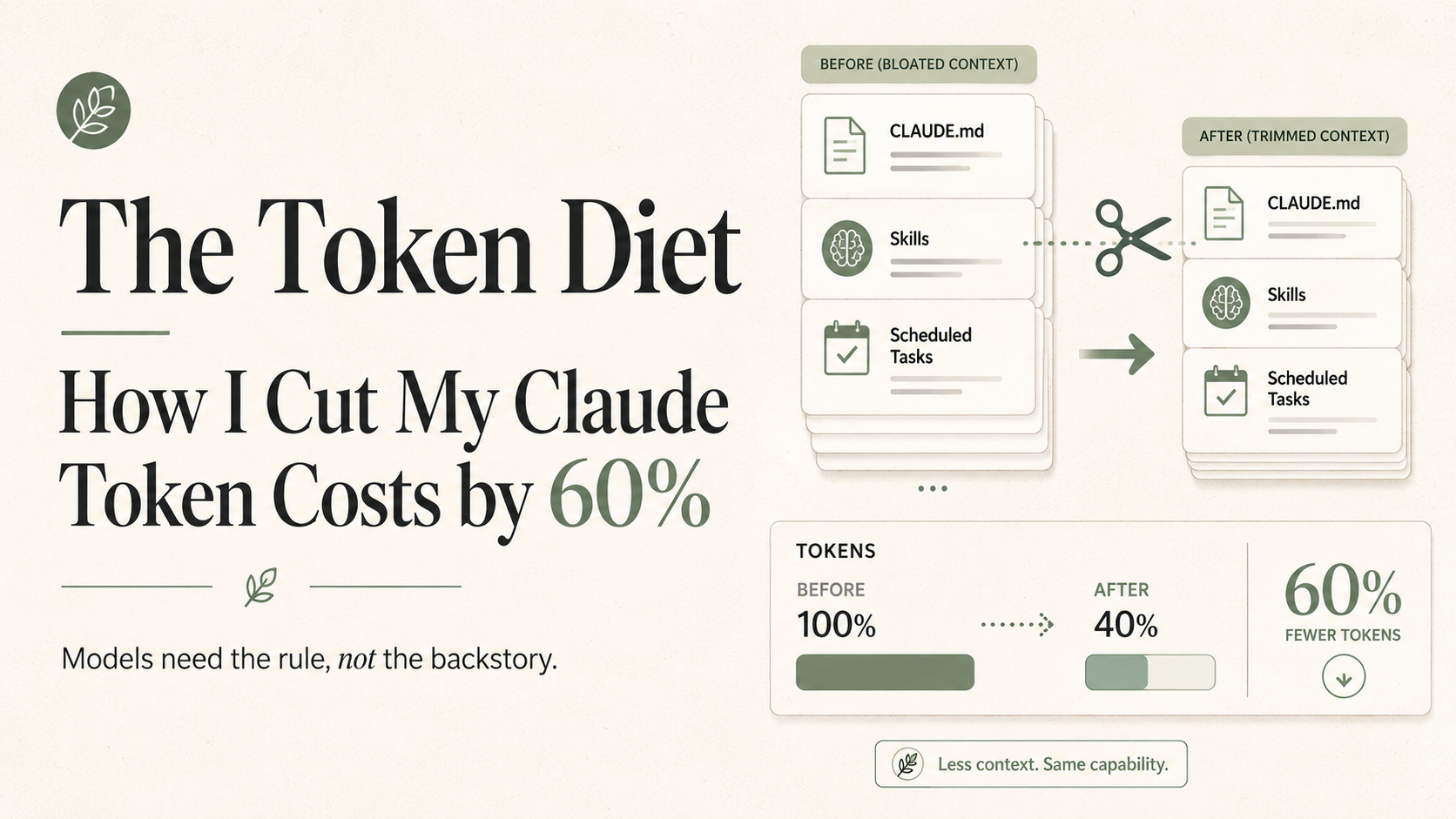
How I Cut My Claude Token Costs by 60% (Without Losing Capability)
Claude re-reads your memory file, skills, and task list on every message. I trimmed mine 60% with four prompts and lost nothing. Here is how a token diet works.
Read more: How I Cut My Claude Token Costs by 60% (Without Losing Capability)
-
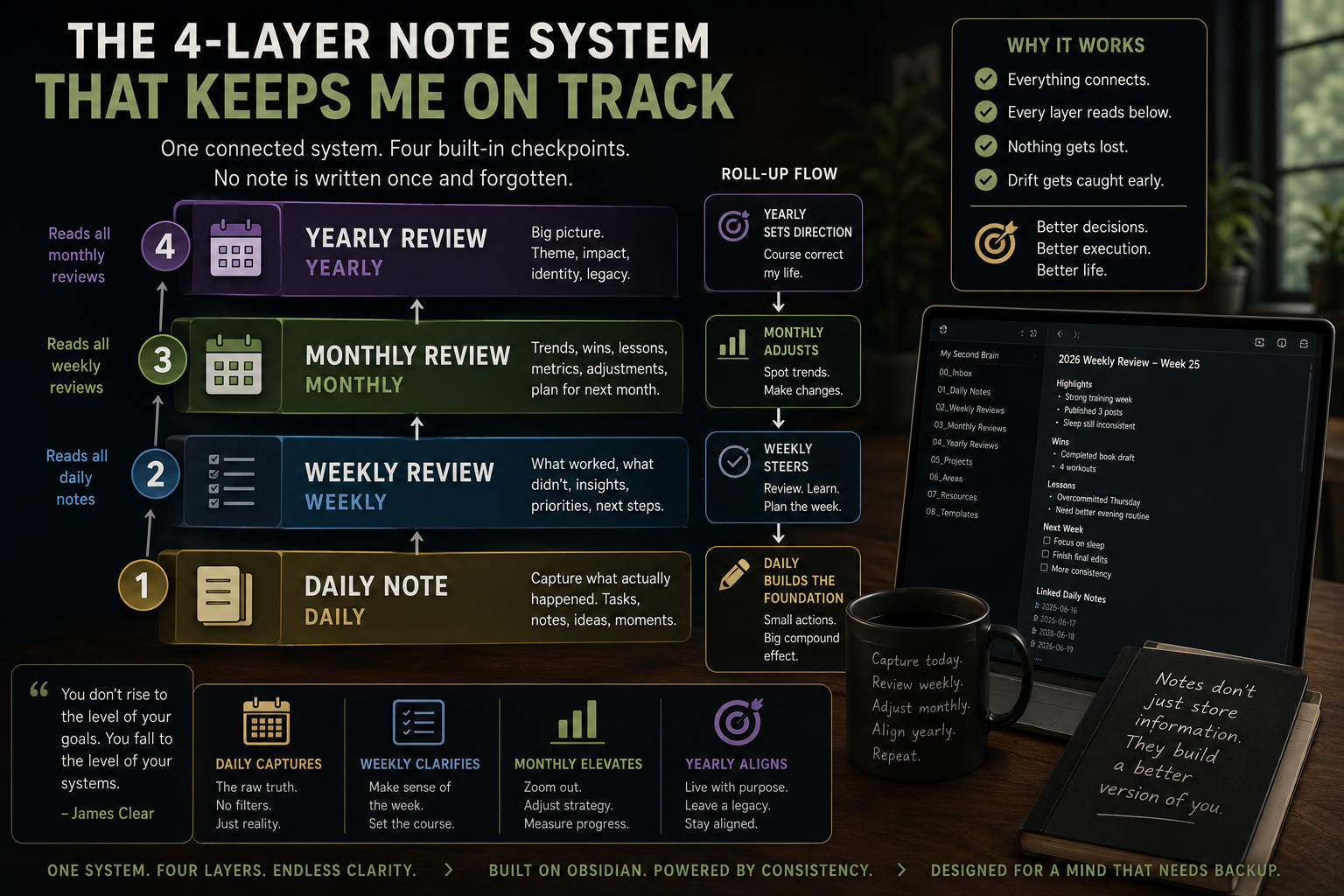
How My Note System Compounds: Daily Notes to Weekly, Monthly, and Yearly Reviews
The short answer: I run one connected, compounding note system with four layers. A daily note captures what actually happened. Every week, the daily notes roll up into a weekly review. At the end of each month, those weekly reviews roll up into a monthly review. Once a year, the monthly reviews roll up into…
Read more: How My Note System Compounds: Daily Notes to Weekly, Monthly, and Yearly Reviews
-
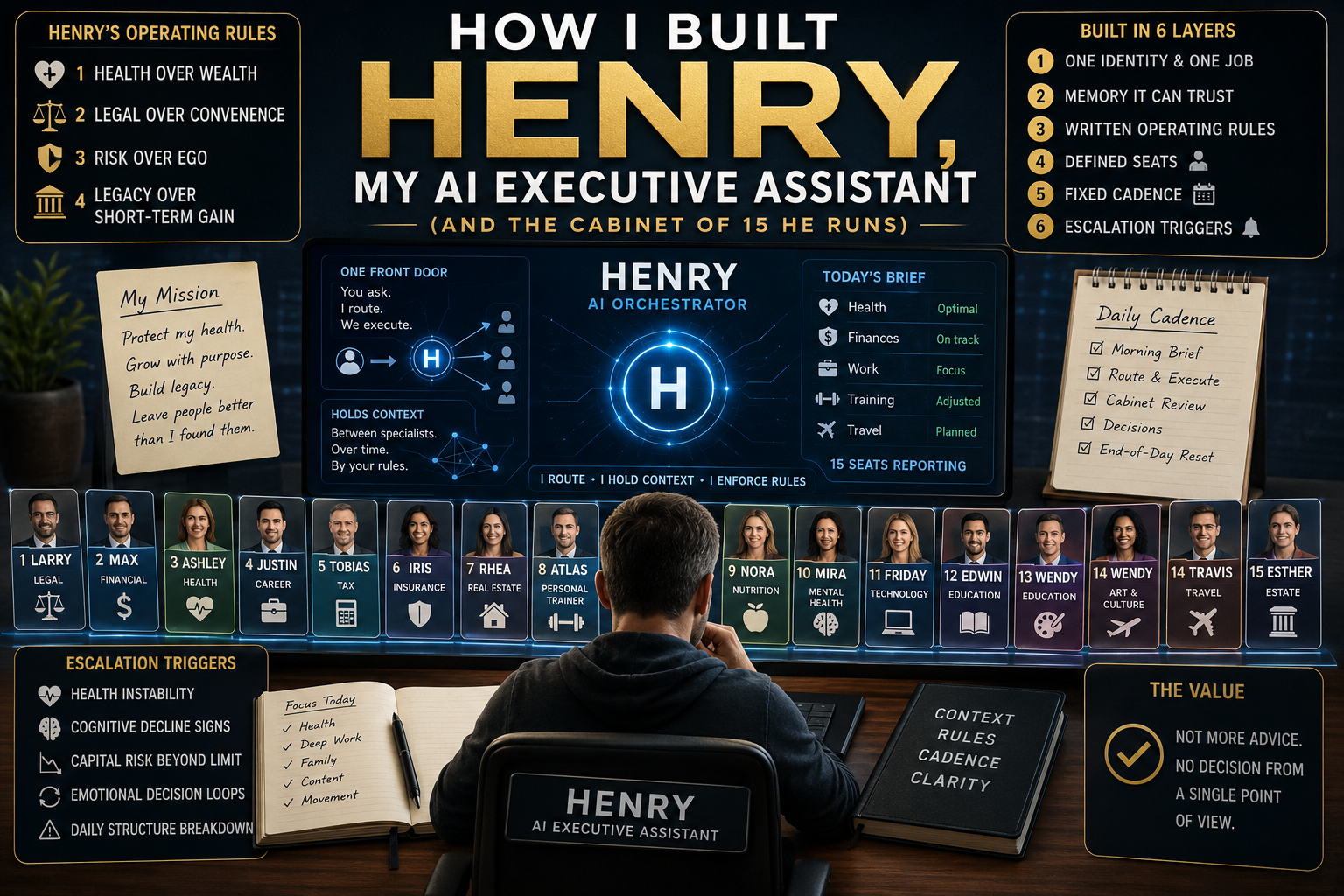
How I Built Henry, My AI Executive Assistant (and the Cabinet of 15 He Runs)
The short answer: Henry is the AI executive assistant I built to run my life like an organized office instead of a pile of open tabs. He has one job: take every request, route it to the right specialist, hold the context between them, and resolve conflicts by fixed rules. Under Henry sits a cabinet…
Read more: How I Built Henry, My AI Executive Assistant (and the Cabinet of 15 He Runs)
-
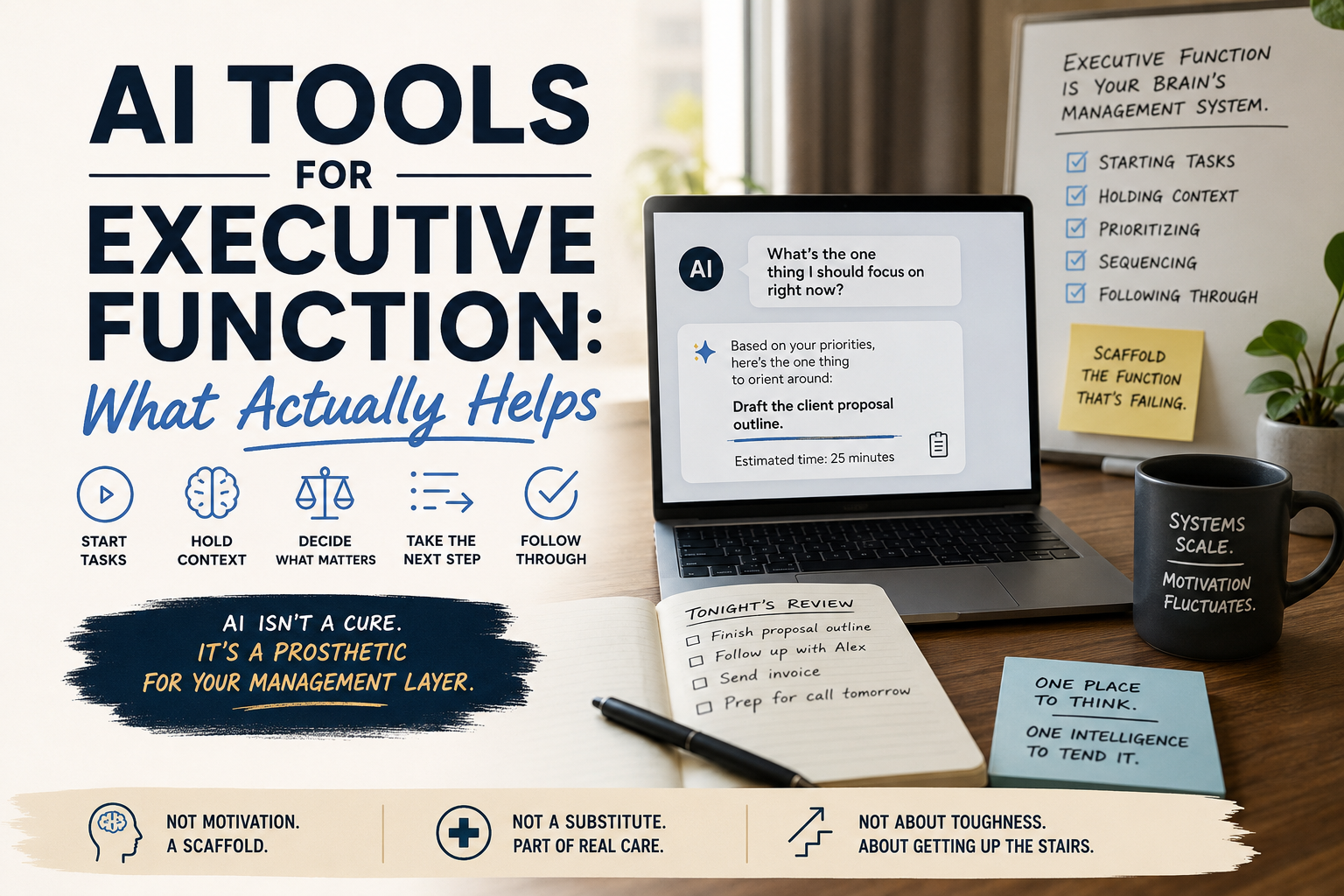
AI Tools for Executive Function: What Actually Helps
Executive function is the brain’s management system. Here are the AI tools and prompts I use to scaffold it after a stroke, and how anyone can use them.
Read more: AI Tools for Executive Function: What Actually Helps
-
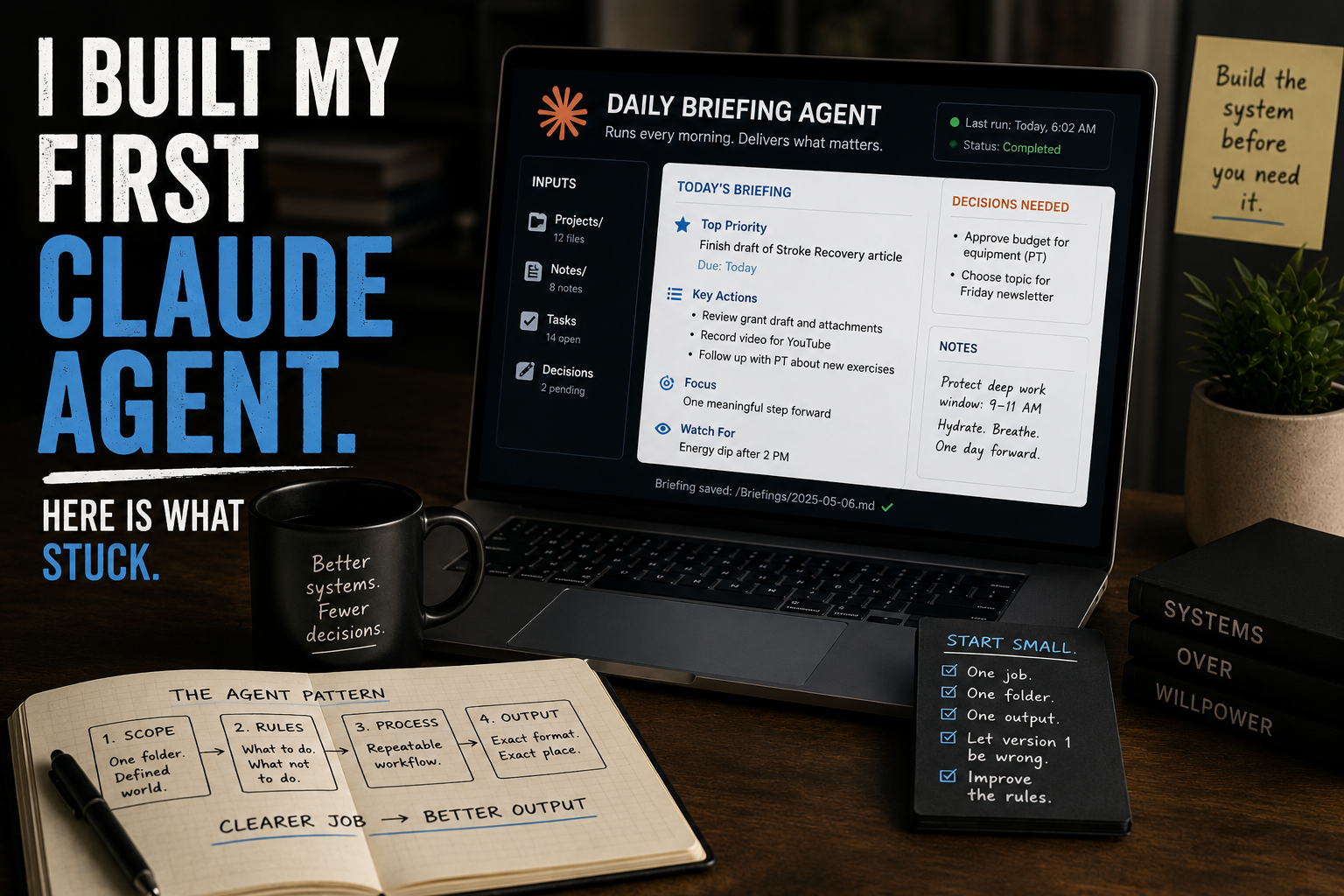
I Built My First Claude Agent. Here Is What Stuck.
The difference between a chatbot and an AI agent is simple: a chatbot waits for your next message, while an agent keeps working until the job is done. After a year of copy-paste AI sessions, I built one small daily briefing agent with Claude. Here is what actually changed how I work, and the pattern…
Read more: I Built My First Claude Agent. Here Is What Stuck.
-
How to Use AI for Brain Fog: Prompts That Work When Your Brain Won’t
The short answer: AI works for brain fog when you stop treating it like a search engine and start treating it like a cognitive prosthetic: a tool that stands in for the specific function that’s struggling. The word that won’t come. The task you can’t start. The email you can’t parse. I collected the 44…
Read more: How to Use AI for Brain Fog: Prompts That Work When Your Brain Won’t
-
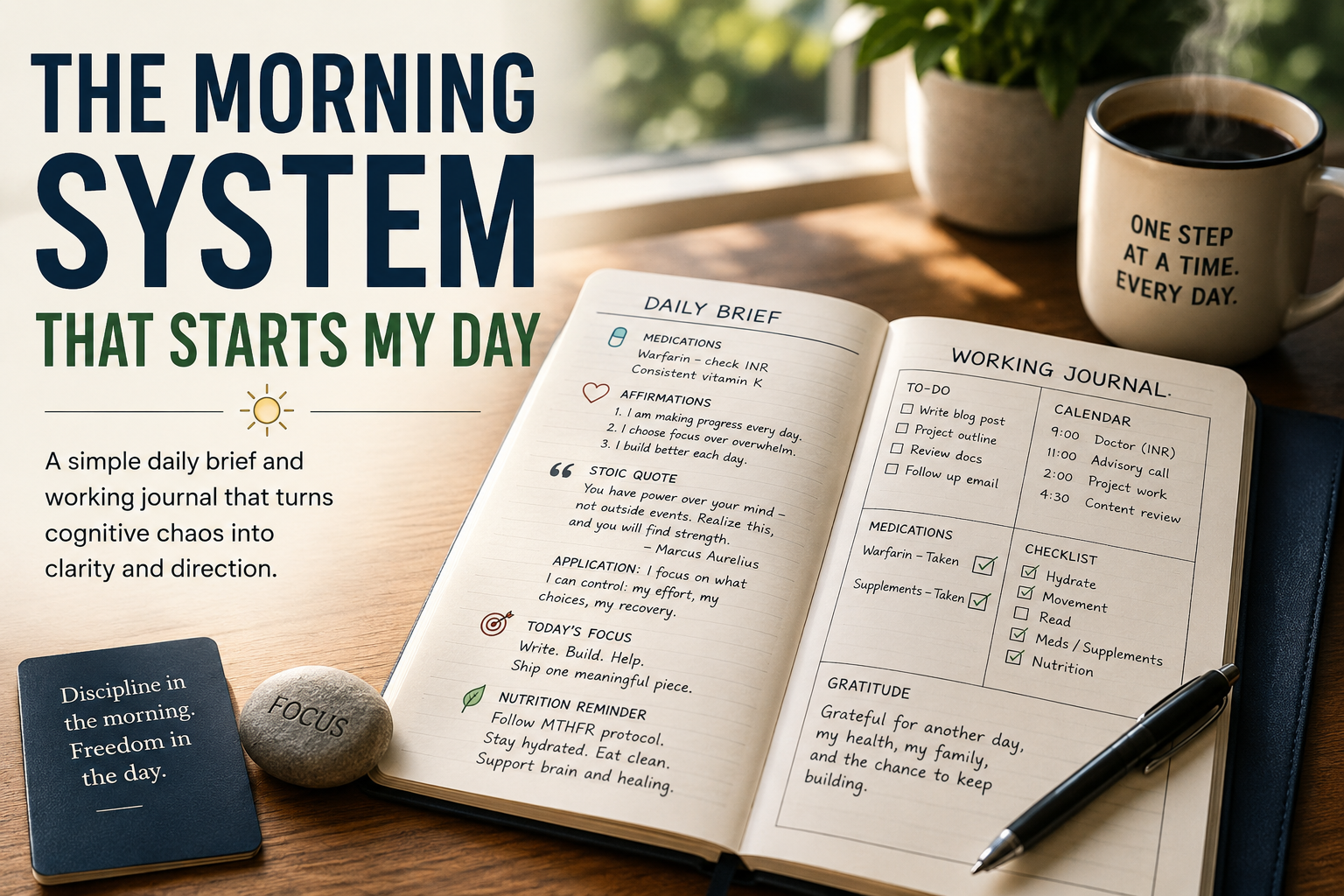
The Morning System That Starts My Day
After my stroke, mornings became a cognitive obstacle course. Discover the automated morning system, a daily brief and working journal, that removes the reconstruction step and helps stroke survivors and anyone with cognitive fatigue start their day with clarity and structure.